
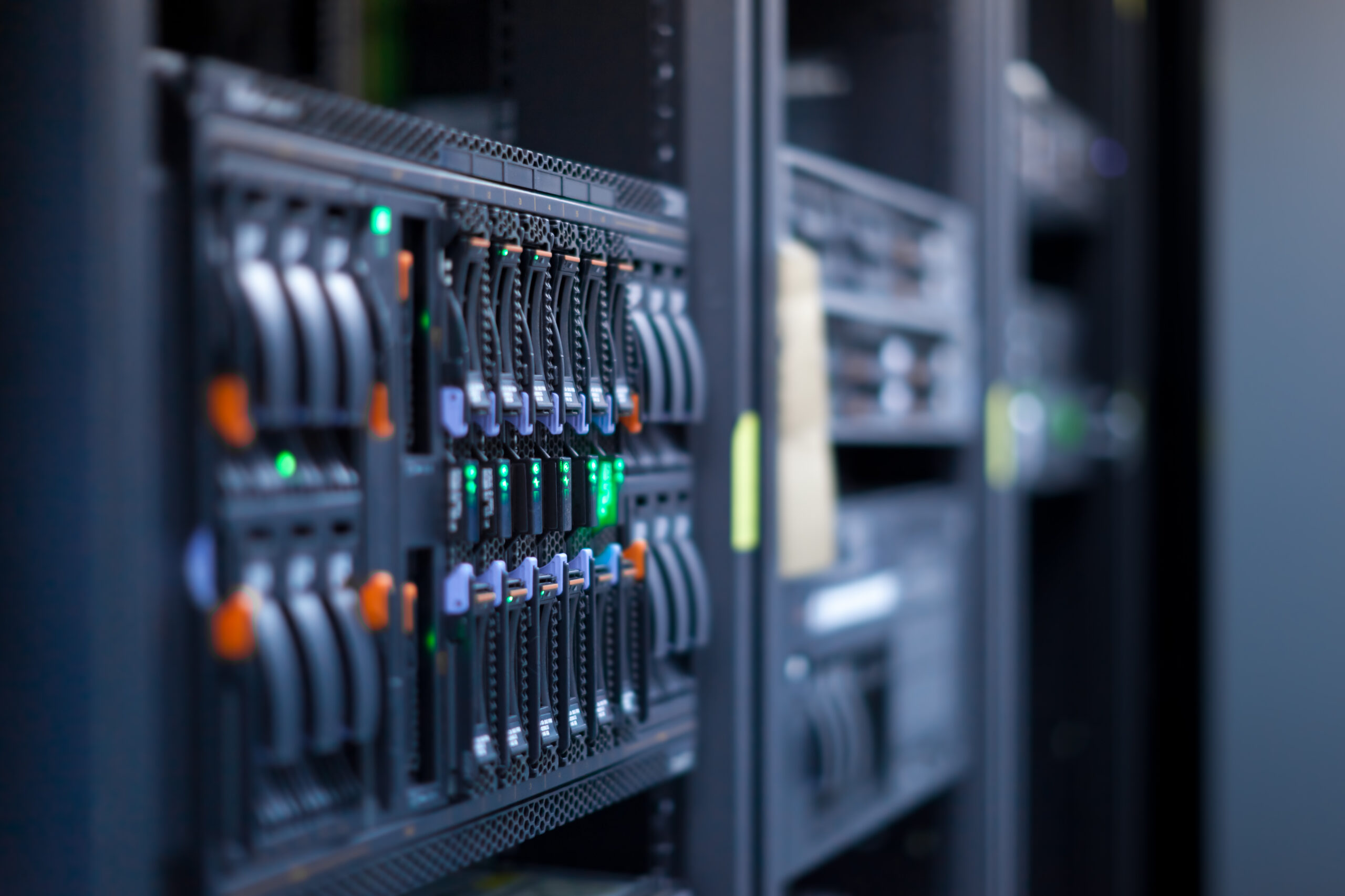
For years, buying a server followed a familiar rhythm. You knew the approximate cost, you knew the refresh cycle, and you built your IT budget around both. That predictability is gone.
Two things happened in 2026 that broke the model: quotes came back materially higher than expected, and the window in which that hardware stays supported has shrunk faster than the window in which it physically wears out. This post covers what changed, what a server costs over ten years, and what the cloud alternative looks like.
What Happened to Server Pricing in 2026?
The short answer: AI ate the memory supply. AI accelerators like NVIDIA’s H100 and H200 have consumed an ever-growing share of global DRAM manufacturing capacity. As a result, server refresh quotes that ran around $25,000 a few years ago are coming back near $50,000 in our experience. That’s far more than general inflation can be blamed for.
Memory now accounts for up to 25% of the bill of materials when buying a server—and far more on a RAM-dense virtualization host. When memory gets expensive, the whole box gets expensive. Storage is rising even faster, with NAND contract prices estimated to rise 70%–75% quarter over quarter in Q2 2026. New fab capacity isn’t arriving in meaningful volume until 2027 at the earliest, which means no near-term relief.
The 10-Year Math
| Then | Now | Change | |
| Cost per refresh | ~$25,000 | ~$50,000 | 2x |
| Supported life (OEM) | 5-7 years | 3-5 years | ~40% shorter |
| Refresh events per decade | ~1.4 | ~2.5 | +75% |
| 10-year hardware spend | ~$36,000 | ~$125,000 | ~3.5x |
| Quote validity at purchase | Weeks | Days | — |
Costs That Never Appear on the Hardware Quote
| Cost | Recurs each refresh? | Notes |
| Implementation, migration, configuration labor | Yes | Scales with environment complexity, not server price |
| Windows Server, database, supporting licensing | Yes | Re-purchased or re-versioned every cycle |
| Backup and DR infrastructure | Yes, on its own schedule | Ages out independently of the primary server |
| Cybersecurity tooling | Ongoing | Annual subscription, not a one-time buy |
| Patch and update management | Ongoing | Staff time, every month |
| Downtime and lost productivity | Yes | One cutover became two to three per decade |
| Space, power, cooling, UPS | Ongoing + periodic | UPS batteries run a three-to-five-year cycle of their own |
You’re Not Buying a Server, You’re Buying a Cycle
The real question isn’t what buying a server costs this time; it’s what the next decade of buying a server will cost, at prices no one can forecast.
Hosted infrastructure changes that equation. It converts a recurring capital event into a predictable operating expense. Component pricing, hardware refresh, and support-window management become the provider’s problem, not yours. Your existing Windows applications keep running as-is. No software replacement, no re-platforming, no surprises. You stay on supported, patched, compliance-current infrastructure without purchasing it outright.
Capacity also scales with actual headcount instead of being sized against a five-year guess, which matters more when over-speccing RAM “just in case” is now genuinely expensive.
How to Evaluate This at Your Next Refresh
Before you approve the next quote, work through a few honest questions:
- Ask the vendor for the end-of-support date, not the warranty length. That’s your real planning number, and they’re not the same.
- Build the 10-year view across multiple refresh events, not a single quote comparison.
- Audit actual memory utilization before speccing the replacement. The old over-provisioning habit is expensive now.
- Add up what your team already spends maintaining the current environment. Patch management, monitoring, and update cycles are real labor costs.
- Decide whether owning hardware is a business advantage or a habit. For most small and mid-sized businesses, it’s the latter.
Frequently Asked Questions
Q: Why did server prices go up so much in 2026?
A: Server prices rose primarily because of AI demand, as chip manufacturers diverted DRAM production toward High Bandwidth Memory for AI accelerators. This reduced the supply of conventional server memory.
Q: How much does buying a server cost in 2026?
A: A standard business server that would have cost around $25,000 a few years ago is now coming back closer to $50,000 in current quoting experience. Individual quotes vary significantly by configuration, and quote validity has shrunk from weeks down to four to seven days at many distributors.
Q: How long does a business server last?
A: A business server typically runs physically for 7 to 10 years. However, OEM support windows have shortened to 3 to 5 years. That gap matters: you may be running hardware that still functions but no longer receives security patches or manufacturer support, creating compliance and operational risk.
Q: Is cloud hosting cheaper than buying a server?
A: On a single-quote basis, it depends on the workload. Across a full decade, hosted infrastructure typically costs less when you factor in multiple hardware refresh cycles, labor, licensing, downtime, and the hidden costs that never appear on a hardware quote.
Q: Can I move my existing applications to the cloud without replacing my software?
A: In most cases, yes. Hosted infrastructure from providers like CyberlinkASP runs your existing Windows applications as-is. There’s no re-platforming required and no need to replace compatible software that’s already working.
Q: What happens to my current server if I move to hosted infrastructure?
A: Migration timelines and decommissioning plans vary by environment complexity. A hosted infrastructure provider will typically handle migration planning, configuration, and cutover, then help you decommission or repurpose the existing hardware once the transition is complete.
Q: Do I still need internal IT staff if I move to hosted infrastructure?
A: That depends on the scope of the managed services agreement. A full managed hosting arrangement handles patching, updates, monitoring, and support, which reduces the day-to-day burden on internal IT staff significantly. Some businesses retain internal staff for user support and line-of-business needs; others scale back accordingly.
Talk to CyberlinkASP Before Your Next Refresh
If a refresh is coming up, now is the right time to run the numbers on hosted infrastructure. CyberlinkASP provides fully managed, hosted Windows application environments for businesses across the United States, with 24/7 support and predictable monthly pricing.
Get in touch with CyberlinkASP online or call today to talk through what your specific environment would look like on hosted infrastructure.